A Day of Quiet Significance
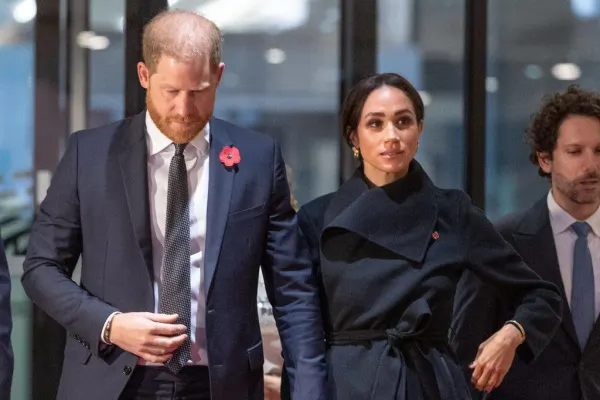
The Royal Family gathered at the Cenotaph on Whitehall on Remembrance Sunday for the National Service of Remembrance, with King Charles leading the two-minute silence at 11am before laying a wreath at the war memorial. Prince William followed with his own tribute, featuring the Prince of Wales feathers and a Welsh red ribbon, while equerry laid a wreath on behalf of Queen Camilla. Prince Edward, The Duke of Edinburgh, and Princess Anne, The Princess Royal, then stepped forward to place their own.
Watching from the balconies of the Foreign, Commonwealth and Development Office — which looks directly down onto the Cenotaph — were Queen Camilla and Princess Catherine, both dressed in tailored black and both wearing something that quietly demanded a closer look: three crimson poppies pinned to their coats.
The Meaning Behind the Three Poppies
Buckingham Palace has never officially confirmed the significance of the number, but royal historians point to several compelling theories. The most widely accepted is that three poppies represent the three primary branches of the UK Armed Forces: the British Army, the Royal Navy, and the Royal Air Force — all three of which both Camilla and Catherine hold senior honorary military roles across.
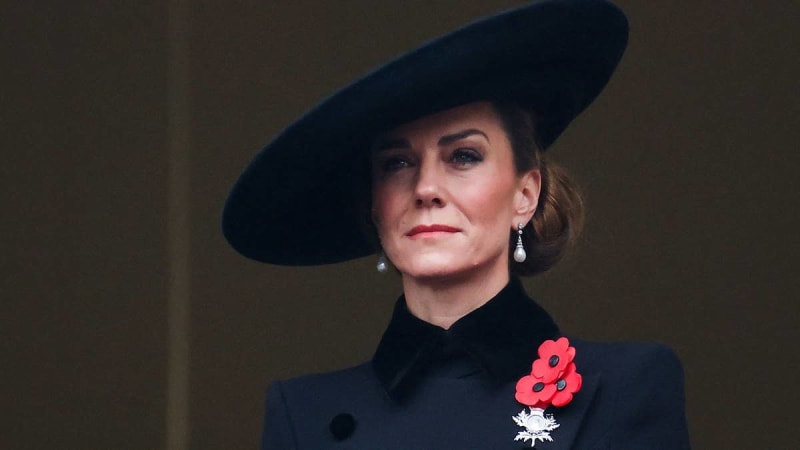
This practice follows a long-standing tradition set by the late Queen Elizabeth II, who famously wore five poppies to represent the three services alongside Civil Defence and women's war services.
A second, more personal theory holds that the royals wear multiple poppies to honour family members who gave their lives in conflict. Princess Catherine's great-grandmother had three brothers killed in action during the First World War — a connection the Princess explored with evident emotion during a visit to the Imperial War Museum in 2018, where she viewed letters written by her ancestors. A third, more practical explanation is simply visibility: a corsage of poppies is far easier to distinguish against dark formal dress on television broadcasts than a single stem.
Diana's Pearls and the HMS Glasgow Brooch
Beyond the poppies, Princess Catherine's choices on the day carried their own quiet weight. She stepped out in a coat by Catherine Walker and a hat by Jane Taylor, accessorised with the Collingwood pearl drop earrings that once belonged to the late Princess Diana — a piece she has returned to repeatedly for Remembrance occasions over the years.
She also pinned her HMS Glasgow brooch to her coat, a piece that speaks to her role as Lady Sponsor of the Royal Navy warship and carries significance across Scottish heritage, maritime tradition, and military patronage.
Last year, Catherine again opted for Princess Diana's Collingwood pearl drop earrings, alongside a hand-embroidered poppy pin and an RAF badge — a tribute to her paternal grandfather, Peter Middleton, who served as a fighter pilot during World War II.
A Decade of Remembrance
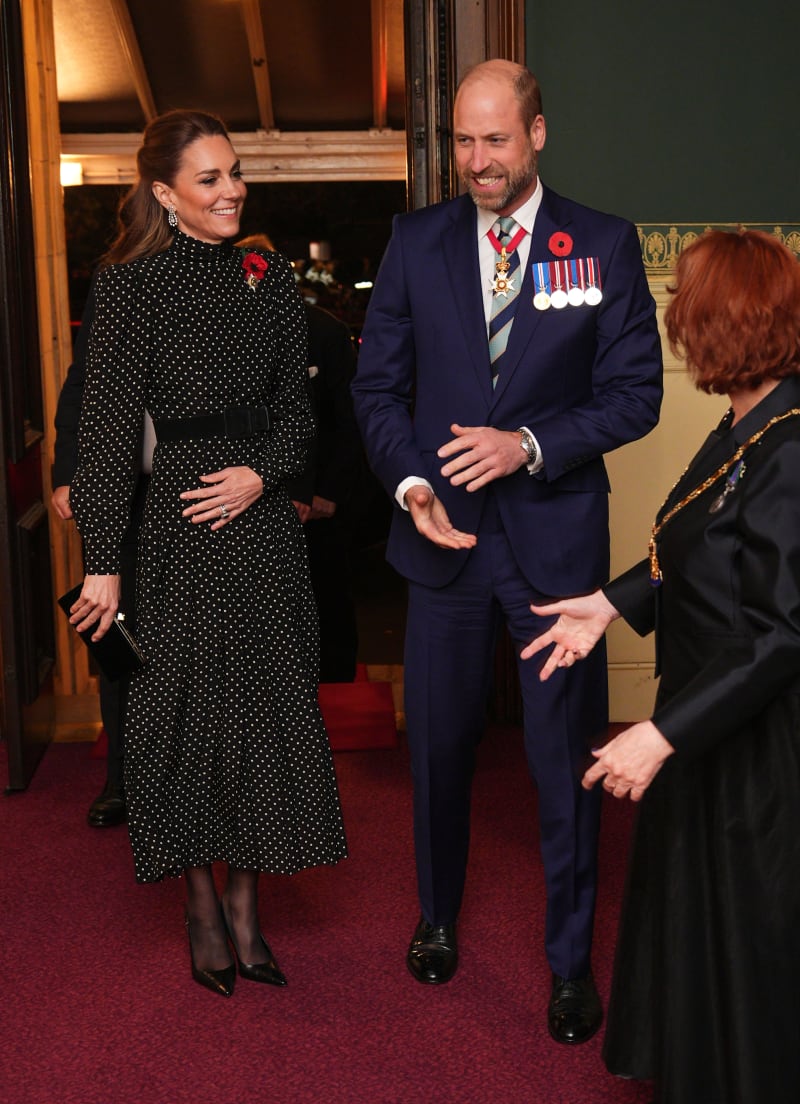
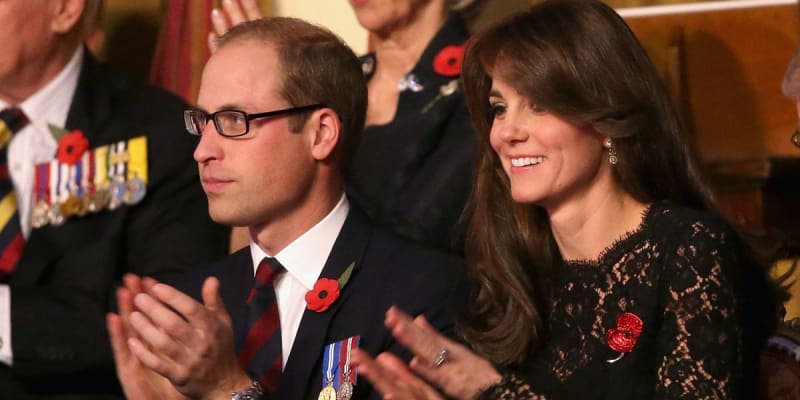
The Festival of Remembrance the previous evening at the Royal Albert Hall marked another chapter in what has become one of the most consistent threads of Princess Catherine's public life. Over more than a decade at the event, she has built a quietly powerful tradition of wearing jewellery tied to the women who came before her — Queen Elizabeth's Bahrain pearl drop earrings, her diamond and pearl pieces, and repeatedly, Diana's Collingwood pearls.
For this year's Festival, she chose Queen Elizabeth's diamond pendant earrings. It is a practice that transforms what could be a formal obligation into something far more personal: a Princess using the language of jewellery to speak across generations, on the days when it matters most.